

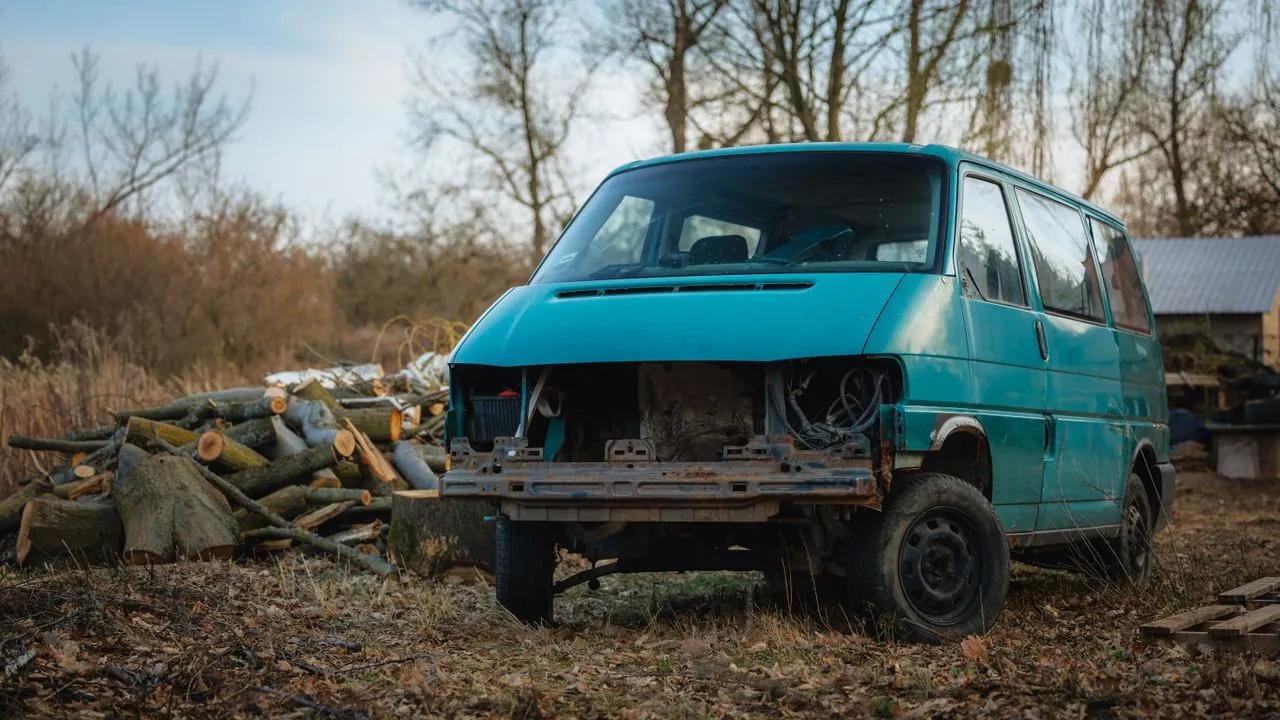
There are two ways to look at an old car.
You can look at it and see a vehicle that has finally reached the end of the road.
Or you can look at it and see an engine, transmission, wheels, electronics, metal and dozens of other pieces that somebody, somewhere, might happily pay for.
And that is where things get interesting.
Because the moment you decide to get rid of an old car, someone will probably tell you:
“Whatever you do, don't scrap it. Sell it for parts. You'll make a fortune.”
Maybe.
But “make a fortune” is doing a lot of heavy lifting in that sentence.
An old car can absolutely contain valuable parts. The problem is that having valuable parts and successfully making money from those parts are two completely different things.
You could make more money parting out a car.
You could also spend three weekends dismantling it, fill your garage with greasy components, argue with five potential buyers over $30, and still have the stripped shell sitting in your driveway afterward.
So before you grab your toolbox, let's ask the question that actually matters:
Is your old car worth more as a collection of parts, or is the whole vehicle worth more as one easy-to-remove package?
The $3,000 Car That Isn't Really Worth $3,000
Here's where people get fooled.
You search online and discover that the engine from your model sells for $900.
The transmission is listed for $600.
A set of wheels is going for $400.
The headlights are $150 each.
The seats look like they could bring another $200.
Suddenly you've mentally turned your $800 junker into a $3,000 payday.
There is just one tiny problem.
Those aren't necessarily the prices you'll receive.
They're asking prices.
That's an enormous difference.
Someone can list a transmission for $600. That doesn't mean somebody is going to hand them $600 for it tomorrow.
Maybe the buyer wants proof it works.
Maybe they want a different version.
Maybe shipping costs make the purchase unattractive.
Maybe there are already 14 cheaper transmissions available.
Maybe the buyer disappears after sending:
“Still available?”
The internet is full of expensive things nobody has bought yet.
Your car's theoretical parts value is not the same as its cash value.
Your Old Car Is Basically a Miniature Warehouse
This is the part that gets left out of the “part out your car and make money” conversation.
Once you decide to sell parts, you're no longer just selling a car.
You're running a tiny used-parts business.
Suddenly you have inventory.
The engine needs to be removed.
The transmission needs to go somewhere.
Wheels need to be cleaned.
Parts need photographs.
Part numbers need to be checked.
Listings need to be written.
Questions need to be answered.
Buyers need to be found.
And eventually, someone needs to come and collect the thing.
That innocent-looking Honda sitting in the driveway has somehow become your newest side hustle.
You didn't apply for this job.
There is no lunch break.
And your customers are going to ask whether you'll take $15 less.
The Question Nobody Asks: How Much Is Your Time Worth?
This can completely change the decision.
Imagine you estimate that selling parts could bring you an extra $1,000.
Excellent.
Now imagine it takes you 35 hours to remove everything, clean it, photograph it, advertise it and deal with buyers.
That's less than $29 an hour.
And that's before buying tools, moving heavy components, storing everything and dealing with the parts that refuse to sell.
Now compare that with selling the complete vehicle.
Maybe you make slightly less.
But you spend a fraction of the time.
Which option actually made you more money?
This is why the biggest mistake isn't necessarily scrapping a car too early.
It can be overestimating the value of your own time at zero.
Your Saturday has value.
Your garage has value.
Your sanity has value.
Then There Is the “What Happens to the Rest?” Problem
Let's say you successfully sell the engine.
Great.
Then someone buys the wheels.
Fantastic.
A buyer takes the headlights.
Excellent.
Now look at your driveway.
There is still a car sitting there.
Except you've removed some of the best stuff.
The remaining shell still needs to be dealt with.
This is one reason parting out a vehicle isn't automatically the superior financial decision.
You aren't really choosing between:
Sell parts vs. scrap car.
You're choosing between:
Manage a dismantling and resale project vs. sell the vehicle as a whole.
That is a much more honest comparison.
But Wait... Sometimes Parting It Out Is Absolutely the Right Move
This isn't an argument against selling parts.
There are situations where it makes perfect sense.
Picture a relatively new vehicle that was badly damaged in a collision.
The front of the car looks like it had an unpleasant meeting with a concrete wall.
But underneath?
The engine is healthy.
The transmission works.
The wheels are good.
The interior survived.
The electronics are intact.
That vehicle may have considerably more value in components than it does as a simple scrap vehicle.
The same can happen with discontinued models.
If replacement parts are difficult to find, owners may actively hunt for used components.
Suddenly that old door sitting in your garage isn't just a door.
It might be exactly the door somebody has been searching for.
The “Rare Car” Factor
Older doesn't always mean worthless.
Sometimes it means harder to replace.
A ten-year-old common vehicle may have thousands of used parts available.
A less common vehicle could have a much smaller supply.
And when supply falls while demand remains, prices can become interesting.
This is especially relevant for:
Older performance vehicles
Discontinued models
Certain trucks
Popular older SUVs
Vehicles with interchangeable components
Cars known for specific mechanical components
But again, rarity only helps if there is an actual buyer.
A rare part nobody needs is still sitting in your garage.
What If the Car Is Basically Dead?
Now we get to the other side of the argument.
Imagine your vehicle has:
A blown transmission.
Severe rust.
Electrical problems.
A failing engine.
Bad suspension.
Damaged bodywork.
Four bald tires.
And a repair estimate that looks more like a mortgage payment than a repair bill.
At some point, repairing the car stops making financial sense.
But that doesn't mean the vehicle has no value.
It can still contain recyclable metals and components that can be recovered.
And this is where selling the entire vehicle can become much more attractive.
You don't have to restore it.
You don't have to make every component work.
You don't have to find twelve different buyers.
You simply turn an unwanted vehicle into a transaction and move on.
The “One Part Is Worth More Than the Whole Car” Trap
This sounds strange, but it happens.
You might discover that one component is worth more than what someone offers for the complete vehicle.
That does not automatically mean you should remove it.
Why?
Because the part's value is only one piece of the equation.
You also have to consider:
Removal cost + time + storage + selling difficulty + remaining vehicle value.
If removing a component takes six hours and requires equipment you don't own, its advertised price becomes less exciting.
If you can remove it in an hour and already have a buyer waiting, that's a different story.
The difference is not the part.
It's the situation.
Here's a Better Way to Think About Your Car
Don't ask:
“How much could I get for this car?”
Ask three questions instead.
Question One: What Is Actually Valuable?
Forget the tiny stuff.
Focus on the major components.
Engine.
Transmission.
Wheels.
Catalytic converter.
Electronics.
Interior.
Body panels.
Then ask whether those parts are actually in demand.
Question Two: Can I Realistically Sell Them?
A $700 engine isn't worth $700 to you if nobody wants your exact version.
Search for actual completed sales when possible rather than simply looking at advertisements.
Check condition.
Check compatibility.
Check mileage.
Check whether buyers expect testing or warranties.
The more uncertainty there is, the less you should rely on the advertised price.
Question Three: What Happens to the Car Afterward?
This is the question that can save you from a huge headache.
If you sell five major parts, who takes the remaining vehicle?
If the answer is “I'll figure it out later,” stop there.
“Later” has a funny habit of becoming six months.
There Is Also a Speed Factor
Money isn't the only thing being exchanged.
You're exchanging time for money.
If your old car is sitting on a driveway you actually need, every additional week matters.
If you're paying storage fees, every additional week matters.
If the vehicle isn't insured or cannot be legally driven, every additional week can create another problem.
If you're moving, renovating or selling your home, you may value a cleared driveway more than an extra few hundred dollars.
Financial decisions aren't always about getting the biggest number.
Sometimes they're about getting the best outcome.
So, What Should You Do?
Here's the slightly annoying answer:
It depends.
But we can make it less annoying.
Selling for parts is probably worth considering if:
The vehicle has several valuable components.
The major mechanical parts work.
The model has strong used-parts demand.
You have mechanical knowledge.
You have somewhere to store everything.
You have the equipment to remove parts.
You don't mind waiting for buyers.
And most importantly, the potential additional profit is large enough to justify the work.
Selling the whole vehicle is probably smarter if:
The car has extensive damage.
The major mechanical components have failed.
The vehicle has little parts demand.
You don't have the tools.
You don't have storage space.
You need it gone quickly.
You don't want to spend your evenings becoming a part-time auto-parts dealer.
Or the difference between the two options simply isn't large enough to matter.
The 30-Minute Reality Check
Before making a decision, spend 30 minutes researching.
Not three days.
Thirty minutes.
Write down the realistic selling price of the three or four most valuable parts.
Then estimate how long removing and selling them would take.
Add your expected costs.
Then compare that number with what you could realistically receive for the complete vehicle.
If parting it out could net you an extra $1,000 after everything, it may be worth considering.
If it might net you an extra $150 after 20 hours of work?
That's not a jackpot.
That's a weekend disappearing into the automotive void.
Sometimes the Best Deal Is the One That Ends the Problem
There is a strange psychological trap with old cars.
Owners often think:
“I've already spent so much money on this car. I should get as much as possible back.”
Understandable.
But the money you've already spent is gone.
Your decision today should be based on what the vehicle is worth now, not what you wish it were worth.
If the car needs thousands in repairs, don't throw more money at it simply because you have owned it for ten years.
If the parts are genuinely valuable and easy to sell, take advantage of that.
If they're not, don't turn your driveway into a dismantling yard in pursuit of a few extra dollars.
The Bottom Line: Don't Confuse Potential With Profit
Your old car may contain plenty of valuable things.
That doesn't necessarily mean the best financial move is to take it apart.
Parting out makes sense when the numbers, demand, equipment and your available time all line up.
Selling the whole vehicle makes more sense when convenience, speed and certainty become more valuable than chasing every possible dollar.
The smartest decision is not necessarily the one that produces the highest theoretical amount.
It's the one that leaves you with the best real return after the work is finished.
Because at the end of the day, nobody wants to spend two months selling a transmission, three doors and a set of headlights just to discover they've accidentally created a second job.
Sometimes your old car is a parts treasure chest.
Sometimes it's simply a car that has reached the end of its useful life.
The trick is knowing which one you're actually looking at.