

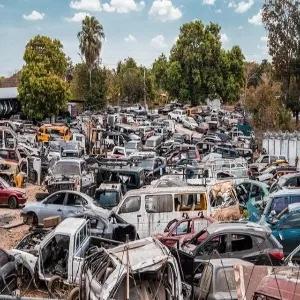
There is a strange moment in every car's life when the question changes.
For years, you ask:
“How do I keep this car running?”
Then one day, after another repair estimate, a failed component, or a particularly impressive collection of rust, the question becomes:
“What am I actually supposed to do with this thing now?”
That's when a vehicle reaches the end of its road life.
But here's the part many car owners don't realize: an end-of-life vehicle isn't simply a useless object waiting to be crushed. Once it leaves your driveway, it can enter a surprisingly complicated chain of inspection, parts recovery, depollution, material separation, recycling, and resale.
And some of the things inside that old vehicle can be far more valuable than its owner expects.
So let's forget the vague version of the story “the car gets crushed and recycled” and follow what can actually happen to a vehicle from the moment its driving days are over.
First Things First: How Does a Car Reach the End of Its Road Life?
Age alone doesn't decide a car's fate.
There are 15-year-old vehicles happily commuting every morning and five-year-old vehicles that are effectively finished after a serious collision.
What matters is whether the vehicle still makes financial and practical sense to keep on the road.
Consider an older sedan worth $4,000.
Now imagine it needs:
A transmission rebuild
Suspension work
New tires
Exhaust repairs
Brake work
Rust repairs
Suddenly, the owner isn't really deciding whether to fix a car.
They're deciding whether to put several thousand dollars into a vehicle that may still be worth less than the repair bill.
That's often the tipping point.
Other vehicles reach retirement because of severe accident damage, extensive corrosion, flood damage, electrical problems, failed emissions systems, or simply years of deferred maintenance.
So an "end-of-life vehicle" is less about a birthday and more about economics, condition, and practicality.
The Car Leaves the Driveway But Its Story Isn't Over
Once an owner decides to part with the vehicle, the next challenge is getting it somewhere that can actually process it.
A running car might be driven to a facility.
A vehicle with a dead engine, destroyed transmission, flat tires, severe damage, or no ability to move under its own power requires towing.
This is where a professional removal service becomes useful.
The vehicle is collected and transported for assessment rather than being left to deteriorate wherever it happens to be parked.
And before anyone starts dismantling anything, there is an important question:
“What exactly have we got here?”
Because two cars that look equally battered can have completely different values.
The First Surprise: A "Junk Car" Isn't Valued Like One Big Chunk of Metal
This is probably the biggest misconception about end-of-life vehicles.
People often imagine that someone looks at a junk car, weighs it, checks the current scrap-metal price, and hands over a number.
That's only part of the picture.
A vehicle can have several layers of value.
Layer 1: Reusable components
A broken vehicle can still contain perfectly functional parts.
Layer 2: Valuable metals
Steel, aluminum, copper, and other materials can be recovered.
Layer 3: Vehicle-specific demand
Certain parts from particular makes and models may be easier to sell or harder to find.
Layer 4: Commodity prices
The value of recyclable metals changes over time.
Layer 5: Overall condition
A vehicle with a dead engine but excellent wheels, interior, electronics, and body components is a different proposition from a stripped-out shell.
This is why simply asking, “How much is a junk car worth per pound?” doesn't tell the whole story.
Then Comes the Part Nobody Thinks About: Identification
Before a vehicle is processed, information about the vehicle matters.
The VIN identifies the vehicle and helps establish exactly what is being handled.
Ownership and documentation can also matter when transferring or disposing of a vehicle.
This is important because responsible vehicle recycling isn't supposed to be a mysterious game of:
“Here's a car. Please make it disappear.”
There are administrative and legal considerations surrounding vehicle ownership and disposal.
For the owner, that means having the appropriate documents available and making sure the transfer is handled properly can make the process considerably smoother.
The Battery Gets Special Attention
The battery is another component that shouldn't simply be forgotten.
Traditional vehicles commonly use lead-acid batteries containing lead and electrolyte.
Hybrid and electric vehicles are a different story.
They can contain large high-voltage battery packs with substantially different handling requirements.
That distinction matters.
An old gasoline sedan and a damaged electric vehicle may both be described casually as "junk cars," but their recycling requirements can be very different.
For EVs and hybrids, battery handling is an especially important part of end-of-life processing because the packs are heavy, electrically charged, and contain recoverable materials.
The Catalytic Converter Question
If you've ever wondered why catalytic converters receive so much attention in discussions about vehicle value, there's a reason.
Catalytic converters contain catalytic materials that help reduce harmful emissions from combustion engines.
Some contain precious-group metals, including platinum, palladium, and rhodium.
Their concentrations vary significantly between vehicles, so there isn't one universal value.
This is also why the catalytic converter can sometimes contribute additional value to an end-of-life vehicle.
However, it shouldn't be treated as an automatic jackpot.
The vehicle's exact converter, condition, market demand, and other factors matter.
What Happens to the Tires?
The tires don't simply disappear when the car is recycled.
Depending on their condition and local recycling arrangements, tires may be reused, retreaded, processed into rubber products, or handled through tire-recycling systems.
But again, condition matters.
A relatively good tire with useful tread is very different from a tire that is cracked, bald, or damaged.
This is another example of why an end-of-life vehicle isn't one homogeneous pile of "junk."
It's a collection of different materials with different destinations.
So Where Does All That Steel Go?
This is where the "end" of the vehicle becomes a beginning for something else.
Recovered steel can be melted and processed into new steel products.
It might eventually become part of construction materials, machinery, manufactured goods, or other products.
The exact destination isn't necessarily known when the car enters the recycling stream.
But the fundamental idea is simple:
The material gets another opportunity to be useful.
That is one of the major reasons vehicle recycling matters.
The car's identity disappears.
The material remains.
What About Aluminum and Copper?
Non-ferrous metals can have their own recycling streams.
Aluminum can be recovered from wheels, engine components, transmissions, body components, and other parts.
Copper can come from wiring and electrical components.
Because these metals have different physical properties from steel, they can be separated using different techniques.
This is why vehicle shredding isn't simply about brute force.
After the car is broken down, separation technology does much of the detective work.
Why Does One Junk Car Get More Than Another?
This is the question most owners actually care about.
And the answer is:
Because "junk car" isn't a standardized product.
The amount an owner may receive can be influenced by:
Vehicle weight
A heavier vehicle generally contains more metal.
Current scrap-metal markets
Metal prices move.
Make and model
Some vehicles have stronger demand for used components.
Condition
A vehicle with reusable parts may have additional value.
Completeness
A vehicle missing its engine, wheels, catalytic converter, or other components can be valued differently from a complete vehicle.
Location and towing requirements
Transportation and logistical factors can influence the economics of removal.
Demand for parts
A component that is difficult to source may be worth more than an otherwise ordinary part.
This is why two vehicles that look equally "finished" can receive very different offers.
What If the Car Has Been Sitting for Years?
This is where things get interesting.
A car sitting for five years doesn't necessarily become worthless.
But sitting can create additional problems.
Rubber components deteriorate.
Tires age.
Fluids degrade.
Batteries discharge.
Rust progresses.
Seals can deteriorate.
Rodents may decide the engine bay is luxury accommodation.
So while the vehicle may still contain valuable metals and parts, its condition can change substantially while it sits.
If you already know you're not going to repair it, letting it occupy space for another three years usually doesn't improve the situation.
When Keeping the Car Makes Less Sense Than Letting It Go
There is also a practical lesson here for owners.
If a vehicle is no longer reliable, requires repeated expensive repairs, has severe rust or damage, or has simply been sitting unused for years, keeping it doesn't necessarily preserve its value.
In some cases, you're paying for something that isn't providing any useful transportation.
The car occupies space.
It continues to deteriorate.
And eventually, you still have to deal with it.
For owners who have reached that point, arranging old scrap car removal can be a practical way to clear the vehicle while allowing its remaining components and materials to enter the recycling chain. If you're looking for a local option, a professional service such as Scrap Car Buyer Mississauga can arrange vehicle removal and provide an assessment based on the vehicle and its recoverable value, rather than treating every old car as identical.
The Biggest Mistake? Assuming "Junk" Means Worthless
A car can be completely finished as transportation and still have considerable material value.
That's the distinction many owners miss.
Road value and recycling value are not the same thing.
A car may be worth almost nothing as a used vehicle because nobody wants to spend money repairing it.
But the same vehicle can still contain:
Reusable components
Recoverable metals
Valuable wiring
A catalytic converter
Usable wheels
Recyclable batteries
Glass
Plastics
Other recoverable materials
That's why getting an actual assessment can be more useful than guessing.
If you're hoping to get top dollar for junk car, don't assume that age, rust, or a dead engine automatically means the vehicle has no value. What remains on the car, its condition, weight, parts demand, and current recycling markets can all influence what it is worth.
So, What Really Happens After the Final Drive?
The short answer is:
A lot more than crushing.
A vehicle can move through a chain that looks roughly like this:
Owner → Collection → Identification & Assessment → Depollution → Parts Recovery → Material Separation → Shredding/Processing → Metal Recovery → Recycling
But the important part is what happens inside that chain.
The vehicle is evaluated.
Useful parts can be recovered.
Fluids and batteries are handled separately.
Tires, glass, plastics, and electronics can follow different processing routes.
Steel, aluminum, and copper can be separated and recycled.
And whatever remains is handled through appropriate waste or recovery streams.
So when your old car finally leaves the driveway, don't picture it simply being crushed into oblivion.
Picture something more interesting.
A machine may eventually destroy the shape of the car.
But it doesn't necessarily destroy its value.
The vehicle simply stops being a car and starts becoming a collection of useful materials and components.
And honestly, after years of potholes, traffic, winter salt, parking tickets, mysterious dashboard noises, and that one repair bill nobody wants to remember, an old car could probably do worse than retiring as somebody else's replacement part or becoming the raw material for something completely new.